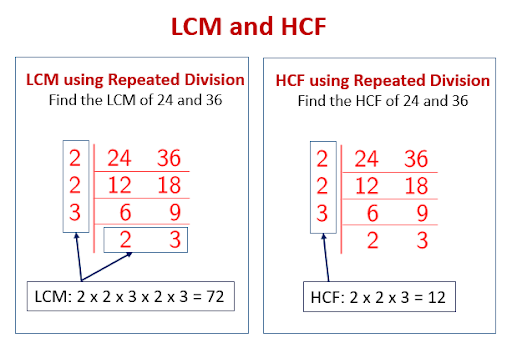
The Highest Common Factor (HCF) is the largest number that divides into two or more numbers evenly. Think of it as the biggest shared piece you can cut from...
Decimals and percentages are two ways of representing parts of a whole. A percentage is a fraction out of 100. To go from a decimal to a percentage, you multiply by 100.....
An angle is formed when two lines or rays meet at a point. Different angles have different names based on their size. An acute angle is less than 90.∘ a right angle is exactly 90....
Significant figures are the meaningful digits in a number. When rounding to a certain number of significant figures, you start counting from the first non-zero digit. Digits to the right....
A circle is a fundamental shape with several important parts. The radius is the distance from the center to the edge. The diameter is the distance across the circle through the center....
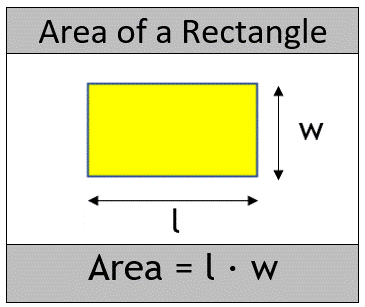
The area of a rectangle is the amount of space inside its boundaries. You can find it by multiplying the length by the width. The formula is Area=Length×Width. The result....
The area of a triangle is the space enclosed by its three sides. The formula is Area=21×base×height. The 'base' is one of the sides, and the 'height' is the perpendicular distance....
The gradient of a line tells you how steep it is. It's also known as the slope. The formula to find the gradient (m) is m=runrise, or using coordinates, m=x2−x1y2−y1....
Factorisation is the reverse of expanding brackets. It's the process of finding the factors of an expression and writing it as a product of those factors. For example, the expression...
The equation of a straight line is often written in the form y=mx+c. Here, 'm' is the gradient (how steep the line is) and 'c' is the y-intercept (where the line crosses the y-axis)....
A quadratic equation is an equation where the highest power of the variable is 2. The general form is ax2+bx+c=0. You can solve quadratic equations by factorising....
Two triangles are congruent if they are exactly the same size and shape. This means all their corresponding sides and angles are equal. There are four rules to prove that...


.png)
.jpg)
.png)
.png)
.png)
.png)
.png)
.jpg)
.jpg)
.jpg)
.jpg)